SCADA
SCADA
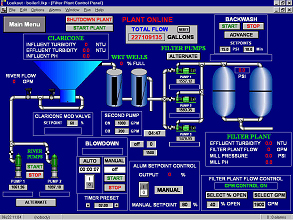
SCADA (Supervisory Control And Data Acquisition) control systems are integrated into a vast range of industries and facilities, such as water treatment plants, power generation and distribution centres, manufacturing operations, pulp and timber mills, pharmaceutical, mining, Gas & Oil along with modern building management systems.
The SCADA system would directly communicate to multiple PLCs & Controller.
- As the name indicates, it is not full control system but rather it focus on the supervisory level.
- Thus the SCADA is a central control system that monitors and controls complete site or system.
- For example a PLC may control the flow of cooling water through part of industrial process, but SCADA system may allow operator to change the control set point for low and will allow alarm conditions such as loss of flow of high temperature to be recorded and displays.
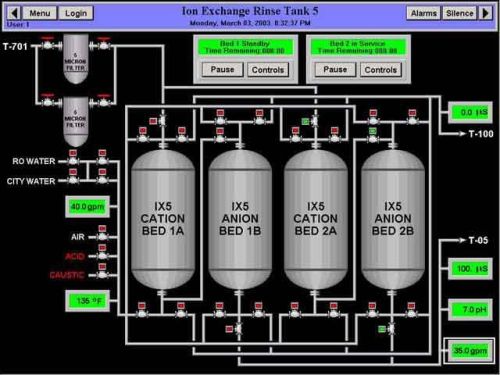
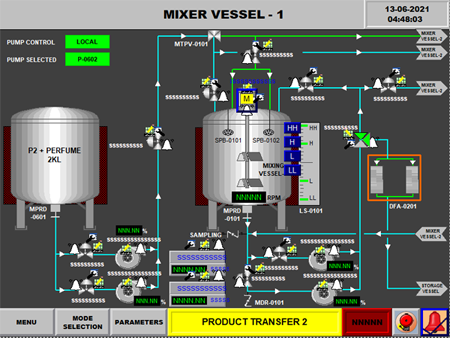
- SCADA is a form of virtual machine, where all physical representations of the processes are actually software code programmed into the system. The SCADA control processes are shown on pages with pictures, graphs and/or diagrams and may also include embedded links and pop-ups that show, or allow modification of, individual processes. SCADA controls and communicates with a wide range of equipment and networks, and due to the programming ability allows almost endless capabilities for customization, modification and expansion.
- In order for SCADA to function efficiently and safely it must be programmed correctly, any error or ‘bug’ in the code may cause the SCADA, along with any device it communicates with, to malfunction. With small processes this may cause an inconvenience, with a potential safety hazard if moving machinery is involved. If SCADA is integrated into a large complex process environment, such as an oil or gas refinery, this could cause catastrophic damage including loss of life.
Applications of the SCADA:
- Electrical power generation, transmission and distribution: Here the electric utilities use SCADA system to detect current flow and line voltage, to monitor the operation of the circuit breakers.
- Water and Sewage: State and Municipal water utilities use SCADA to monitor and regulate water flow, reservoir levels, pipe pressure and other factors.
- Buildings, facilities and environments: Facility managers use SCADA to control refrigeration units, lighting, entry and parking systems.
- Manufacturing industry: SCADA systems manage parts inventories, regulate industrial automation and robots.
- PHARMA: The system is constructed is based on the following points to comply with the FDA 21 CFR Part 11 regulations
- User Management Functionalities:
• Multiple User Level as per the User Rights.
• Password Validity.
• User Block/Unblock Facility.
• Configurable Number of Wrong Attempt.
• Minimum 8 Character password length.
• Password Complexity.
• Unique user account. - Audit Trial:
• Tamperproof and Non-Editable Audit Trail Data Format.
• The time stamp of the change of the parameter value and user making the change. - The audit trail records following details:
• User Creation
• User Login / Logout
• Wrong attempts of login
• User Block / Unblock by Administrator
• Old value and new value of parameter change.
• The timestamp of each event. - System Data Backup: HMI offers basic connectivity for data exchange with Central SCADA / MES
- Report Generation and Printing:
• Batch data is stored in secured database format and Batch Report can be generated using this data.
• Report Printing - LAB INSTRUMENTS : The system is constructed is based on the following points to comply with the FDA 21 CFR Part 11 regulations